Showing posts with label Marikina City. Show all posts

Saturday, December 8, 2012

Making Hand-Made High Heel Shoes

I chanced upon this interesting short video 
on hand making high heeled shoes I want to share.


This is the typical way they made shoes in Marikina 
during those days, learning the trade from my father at an early age.

Wednesday, December 2, 2009

Figlia shoes for Hiyas ng Marikina

The grand coronation of the 5th Search for Hiyas ng Marikina was held on April 17 at Teatro Marikina. Spearheading the search are Zonta Club of Marikina and the Association of Barangay Captains.


Induction of Friends of Marikina Museums

Induction of the Friends of Marikina Museums to assist in the continuance of Marikina city’s museums by way of fund raising and community projects.

1. The Shoe Museum is the first of its kind in the Philippines and one of only a handful around the world. Housed in an artistically restored former rice mill (built circa 1860), this museum traces the history of the shoe industry in Marikina, the Philippines' shoe-making capital. Among the exhibits are the famous (or infamous) collection of 1,500 pairs that once belonged to Imelda Marcos. Other displays of historical value and human interest are shoes of former Philippine presidents and their first ladies. The museum is located at J. P. Rizal StreetMarikina 1800 Philippines, Tel +632 4309735. Open Hours at 8am-5pm Mon-Fri.

2. The Doll Museum, opened in 2003 and originally housed in Kapitan Moy Building , was conceptualized by Mayor Ma. Lourdes C. Fernando to showcase the history of Marikina, its culture, beliefs and traditions. The dolls portray the evolution and progress of Marikina as it is now…. A thriving economy with hard working, tenacious, and disciplined citizens.There are more than 500 papier-mache and resin dolls encased in 47 glass dioramas, highlighting the history of Marikina and the many facets of our cultural legacy – from our fondness for kinship, tradition, and gaiety to our distinctive celebration of milestones, family occasions, and festivals. The dolls were designed and made by renowned Filipino fashion designer Patis Tesoro in partnership with Guia Gomez. The dolls heads, hands and feet are made from resin and are all hand-painted. The clothes are made from locally produced fabric.The Doll Museum depicts the most significant aspects of Marikina’s transformation reminding us of our rich cultural heritage… from an agricultural past to an urbanized, industrial present as depicted by the bamboo in the City Seal.http://city.marikina.gov.ph/PAGES/dollmuseum.htm

3. The Christmas Belen Museum. The scene of Bethlehem is a profound reminder of how Christ chose to be born in poverty and in simplicity. The message of hope which the Belen Museum brings resonates with many people around the world. The Christmas season is celebrated in different ways around the world.First Belen of Mrs. Gigi Carlos purchased during her high school days in a Catholic Store in Tayuman.http://www.marikina.gov.ph/PAGES/belen/belenmuseum.htm

“The mystery of Bethlehem reveals itself in our spirits, becoming more fascinating the more we advance on the path of life, and the more we realize the magnitude of the mission we need to accomplish in this world, be it humble or noble, arduous or thankless.” …. Ma. Lourdes C. Fernando, Mayor, City of Marikina


4. Museum of Miniature Collections. Ms. Aleli Lourdes Salinas Vengua, an interior decorator, started her miniature collection as a hobby. As a child, she preferred smaller toys to big toys and would exchange her big toys for the smaller ones. Her love for smaller things got her started making miniature items for the interior of a rich man’s mansion. When she passed away, her daughter, Lara Vengua, lent her miniature collection to the Marikina City government for public viewing. The collection was opened for viewing to a select few on December 23, 2005, then opened to the public on January 20, 2006.The museum showcases about 60,000 miniature pieces to make 24 miniature rooms in glass cases, shadow boxes of a sari-sari store, artists studio, frames of various items like animals, hats, cups, musical instruments, and model houses with miniature interiors. They are made from various materials like glass, ceramic, plastic, and wood. Mrs. Vengua carefully planned, designed and patiently handcrafted the 24 rooms of a rich man’s mansion. The rest of the exhibit where either given or done with the help of her daughter, Lara, and her staff. Mrs. Vengua was a businesswoman, Arttraction Inc., manufacturing and selling novelty items, Christmas decors, miniatures, wedding giveaways and exports some of her products to Europe.http://www.marikina.gov.ph/PAGES/miniaturemuseum.htm

6. Disaster Preparedness Museum. The city government has some unique efforts to raise public awareness and disaster management and emergency preparedness. The city has established a Disaster Preparedness Education Center that features an Audio Visual/Training Room, a small disaster management museum, and a disaster management library for children and adults.

5. Health Museum (opening soon)
Tuesday, February 10, 2009

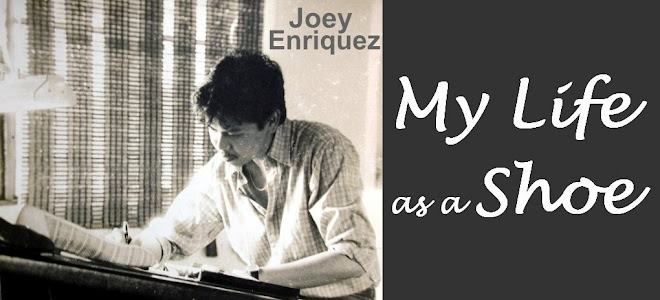
Joey Enriquez feature on twBF


On its 13th and finale episode, twBF features Joey Enriquez of Figlia shoes on its Tagumpay (personalities with rags-to-riches and life-changing stories) segment. Premiered November 16, 8-9 a.m. on CS9 (formerly known as RPN 9), the program showcases inspiring personalities, uplifting community events, and Marikinas best practices.


Mayor Marides Fernando present her five co-hosts on twBF: Aumar Aguilar, Dense Modesto, Ingrid Nieto, Noelle Cassandra, and Halley Chippiazzi. Fernando, said that through twBF, she hopes to share with televiewers key life lessons and important values that have shaped the thinking and character of Marikina and its people, giving them the impetus to continually become better.


Thursday, December 13, 2007

An international boost for Marikina's shoe industry

by PIO-Marikina Posted: 4/18/2004

The Philippine Footwear Federation Incorporated (PFFI) recently joined in the Asia Pacific Leather Fair (APLF) in Hong Kong wherein seven footwear and seven bag companies participated namely: Bristol Shoes, Figlia Shoes, Gibi Shoes, Marquina, Monseigneur Shoes, Rusty Lopez and Unita International Inc. Blue Grass, Enzio Ferrera, Fino Leatherware, G. Designare, Larone Crafts, Martinique and Talimaya. The event, which was a three day affair, was done in collaboration with the Association of the Philippine Leathergoods Exports & Manufacturers (APLEM) in cooperation with the Marikina City Government and the Canadian International Development Agency.

For its theme, the PFFI has chosen the lifestyle concept. As Roger Py, director general of the PFFI explains it, In footwear, we cover men?s, women's and children?s shoes and even dancing shoes, while the APLEM features bags and some complementary garments and accessories as well. Any display from the Philippines is always distinguished by the delightful design and the use of casual bags and shoes with a summery, tropical feel as well as more formal genuine leather shoes of good quality and a whimsical range of children's shoes with fairytale motifs. In addition, the exhibitors got a positive response from the market and according to Joey Enriquez, president of the MCFashion, the footwear products were quite impressive considering we are only seven footwear companies. I believe we have a market to be tapped in the global setting and the Philippines should develop brand marketing. The total negotiated sale from the footwear sector is around $39,613.24.

Mayor Marides Fernando expresses her support as she says, this exhibit is a good start to boost our local shoe industry and at the same time prove that we can be globally competitive. It is also a way to attract local and foreign investors in our city especially now with our thrust being 2004 is Invest in Marikina Year.

Link:
http://news.marikina.gov.ph/pages/newsarch.asp?n=4-2004-c

Shoe History of Marikina


Marikina is not the shoe capital of the Philippines for nothing. For the greater part of the 20th century, Marikina was the biggest manufacturer of quality shoes. There was a time, between 1978 and 1982, when Marikina’s women’s shoes and handbags made of snakeskin were the rave on Fifth Avenue, New York City. As early as 1935, Marikina already had 139 shops producing 260,078 pairs of ladies shoes and 86,692 pairs of men shoes worth P762,896.00. And as may as 2,450 inhabitants were directly engaged in the industry either as shoemakers or uppermakers. By 1983, Marikina produced 70 percent of the shoe production of the Philippines which was estimated at 30 million pairs. (Source:The Role of the Municipal Government in the Planning and Development of Local Industries: The Case of the Marikina Shoe Industry, by Mayor Osmundo de Guzman, De La Salle University, 1983)

Even in those days, shoemaking thrived in such distant places as Cebu, Pangasinan, Iloilo and Ilocos Norte. But Marikina was recognized for its superior craftsmanship, and its proximity to Manila gave it a decided advantage.

Florinio de la Paz, who traveled to Asian countries with a group of local manufacturers in 1968, noted that Marikina Shoes was unmatched in design in the region and second only to Japan in quality.

Marikina’s shoe industry started one afternoon in 1887, at the residence of Don Laureano Guevara, known to this day as Kapitan Moy. Slippers and wooden clogs were already being made at a basement shop. But one day, Tiburcio Eustaquio, assisted by Ambrocio Sta. Ines and Gervacio Carlos, was working on the town’s first pair of shoes – a men’s shoes – while their proprietor, Kapitan Moy, watched expectantly.

Kapitan Moy, highborn and a community leader, had bought himself a pair of imported shoes, during one of his trips to Manila. He used this pair of shoes as an example for his workers to examine and duplicate; they dissected its various parts and, by trial and error, learned how to put them back together.

On this particular day, Kapitan Moy and his shoemakers had their onlookers. All the while, a group of young boys had been craning their necks to watch the whole episode through a grilled window. Kapitan Moy, bothered by their presence, decided that they had had enough to tell their parents -- or their children. One of the boys, Pablo de la Paz, would recount the episode to his children, claiming that it happened in 1888 when he was 14.

Kapitan Moy saw to it that other Marikeños were taught the new skill at once, for he intended it to be a source of livelihood for a town that subsisted largely on fishing and farming. For this, he will be honored as the "Father of the Shoe Industry". Marikeños would build him and Tiburcio Eustaquio a statue that now stands in front of his house.

His residence would become a public elementary school in 1912 and a venue of many social functions during the genteel prewar years. In 1968, the town council and the National Historical Commission declared it a national shrine. And in 1995, Mayor Bayani F. Fernando restored it to its former glory and declared it the city's "Sentrong Pangkultura".

Marikina would become famous for its shoes and other leather products. They were much sought after in many a country churchyard, during town fiestas. Andres Bonifacio, a story goes, had a friend from Marikina make him a leather holster during his many visits to Marikina.

Manila, however, was the prized market, and for a share of it, Marikeños had to deal with the Chinese merchants, who held fort in Gandara, Nueva and other parts of Chinatown. Marikeños, with their craftsmanship and little shops, had no choice but to enter into this partnership with the Chinese who had their stores and bundles of raw materials. It is a partnership that will endure for generations -- and a very unequal partnership it would be.

Since they could dictate the price of finished shoes as well as of raw materials, it was not past the Chinese to take advantage of the Marikeños, and so there was much friction between them. One day in 1936, Marikeños lost their patience. Through "Oras Na" a worker's union organized by Mayor Wenceslao de la Paz, they struck to prevent the delivery of shoes to Chinese stores in Manila. They also prevented shoes from the neighboring town of San Mateo from being delivered to Chinese middlemen.

Though the strikers had the sympathy of the local authorities, they could not outlast the moneyed Chinese merchants. Having made their statement for a better deal, the strikers struck tent and returned to work. It was not the last time the shoemakers would rise in protest against inequities. In the sixties, shoemakers, mostly from San Roque and Calumpang led by Rufino Rodriguez, left their “bonquillas” (work table) to demand higher pay from shoe manufacturers. And in 1994, a small group of manufacturers led by Barangay Captain Celso Mendoza marched to protest the high cost of raw materials. The protest fizzled out for lack of support from local authorities who had become friendly with the local Chinese chamber. In the meantime, the Chinese had relocated their shoe supply stores from Chinatown to Marikina. Operating side by side with shoe shops, the Chinese were able to preclude, by their superior financing, the possibility of Marikeños branching into shoe supply. By the sixties, the chamber had become so powerful that no aspiring politician dared fight with them, except Bayani Vergara, twice defeated candidate for congress who stood against them.

From the start, Marikeños dreamed of owning a store to do away with Chinese middlemen. The prewar years would see "Tindang Bayan", a cooperative organized by Tiburcio Eustaquio, open a shoe store on Gandara St., right at the lion's den. He would himself open another shoe store--Marikit--na--on R. Hidalgo St., Quiapo. The same store would be taken over and transferred to Avenida Rizal by Francisco Sta. Ana Sr. whose sons-- Jose, Mariano and Francisco Jr.--would later become pillars of the shoe industry. The Santos brothers--Herminigildo and Roman--would open H. Santos Shoe Store and Star shoes, respectively, to sell Marikina shoes, the former at the corner of Avenida Rizal and Plaza Goiti.

On 17 January 1940, local manufacturers gained the support of the national government. At a meeting with President Manuel A. Roxas, then secretary of finance and concurrently chairman of the National Economic Council, they organized the National Footwear Corporation. Present at the Kapitan Moy residence were two friends of the shoe industry: Vicente Sabalvarro, chairman of the National Development Corp. (NDC) and Bueneventura Lopez. Among the incorporators were Quirino Desiderio, Jose Guzman, Santiago Cruz, Francisco Sta. Ana, Sr., Francisco Cruz, Andres E. Paz, Fortunato Lazaro, Anastacio Manuel, Elpidio Valentino, Bartolome Mendoza, Andres U. de La Paz, Hugo Cruz, Paulino Santos, Castor de Leon and Florencio Santos.

Made a subsidiary of NDC, the corporation was capitalized at P500, 000 to help members buy shoe materials and machines. It held office at the NDC compound in Pureza St., Sta. Mesa. Pablo de la Paz from Sta. Elena served as one of its officers.

Like most other industries, the shoe industry ground almost to a halt during the Japanese Occupation as capital and raw materials became scarce and the market vanished. The people meanwhile survived on marginal fishing, farming and livestock raising.

The industry recovered slowly after the Japanese occupation, Marikeños losing no time picking up the pieces. The new mayor, Gil Fernando, organized the Philippine Shoe Manufacturing Corp. with a capital of P500,000 to help local manufacturers back at their feet, again with the support of newly-elected President Roxas. The postwar years saw Marikeños open stores and repair shops in Calle Raon, Evangelista, Carriedo and Plaza Sta. Cruz. Leading the way were Angel Santos (later elected Vice Mayor), Francisco Sta. Ana Sr., Francisco Josef, Esteban Guevara, Gervasio Santos, Andres U. de la Paz and Severino Samson. Samson, known as "Mang Bino" would find himself side by side in Carriedo with young Henry Sy, the future taipan.

Before long, Chinese merchants regained their dominance of the industry. Marikeños would retreat to their shops, their stores in Calle Raon and Evengelista which earlier showed promise folded one after another. Marikina was also starting to feel the competition from such towns as Biñan, Pateros, and Liliw, Laguna. Marikeños were largely responsible for teaching the trade to the people in those towns. Local shoemakers were prized working as "maestro" or foremen in those places. The emergence of these competitors meant that Chinese middlemen could now undermine Marikeños by placing their orders for cheaper shoes from Biñan. In later years, cheaper shoes coming from Biñan and other places were crowd out Marikina shoes from such outlets as Shoemart.

An event came to the rescue of the local shoe industry. It gave Marikeños the chance to be their own merchandisers. The Marikina Jaycees, headed by Benjamin "Nonong" Molina Jr., a general’s son and a descendant of Don Laureano Guevara and later Vice-Mayor, hit upon the idea of a shoe trade fair as their project for 1965.

The fair at the present Rodriguez Sports Center would be inaugurated by Gemma Cruz, reigning Miss International, in April 1965, and would last the whole summer, closed only upon the onset of rains. It gave participants a windfall in sales and voluminous orders. Marikina had reasserted her claim as the shoe capital of the nation as thousands flocked to the fair for the much-vaunted Marikina shoes.

The project won the Marikina Jaycees its first and, so far, only international community award, received in Sydney, Australia by Jaycee National President Angelo King. Molina shared credit with Dr. Antonio Tinio, project chairman, Engr. Cesar Mata, who supplied the initial construction materials, Jaycee Vice Presidents Cesar Santos and Rogelio Villareal, two men from Pepsi--Mar Santos of Tañong and Ramon Paguirigan--for free advertising, and Pacifico Enriquez of Calumpang for lining up many manufacturers behind the project.

The following year, a second trade fair was held at the Catholic churchyard to raise funds for the town fiesta. The sponsors were headed by Councilor Guillermo de Guzman. It was not as big and successful as the first one, but it kept the idea of the trade fair alive.

On March 5, 1967, Marikeños put together their experiences of the past two years to launch a bigger trade fair in front of the town hall. When President Marcos came to inaugurate the project, nobody could imagine it would last 14 years until it ceased to be viable after Marikeños chose to open stores and compete in Cubao, Caloocan, Pasay City and Makati.

The trade fair had the backing of the town government, which proceeded to create the Marikina Shoe Trade Commission to maintain and operate the fair. Mayor Osmundo de Guzman chaired the commission with Virginio Cruz as president, and Guillermo de la Paz as executive secretary. The commission collected a certain percentage of the sales for its avowed purpose of building a shoe museum.

A total of P85,000 would be and used to start construction of the shoe museum next to the Rodriguez Memorial Hospital, but the museum was never finished. A year into the operation of the fair, local manufacturers exported shoes to Guam. This operation was handled by the Marikina Shoe Marketing Corp. organized by the manufacturers. The Manufacturers went on several trade missions, to Asia, Europe and the U.S. Florinio de la Paz, Rodolfo Valentino (elected Mayor) and Mariano Sta. Ana, scions of pioneers of the shoe industry, took turns managing the corporation, sharing the same building with the Marikina Shoe Trade Commission.

Not content with the success of the shoe fair, many of the stallholders, led by Florinio de la Paz would occupy the New Marikina Shoe Fair on Tuason Avenue. It was initially a success. But it did not last long. After their negotiation for a lease purchase of the building with Filinvest fell through, the stallholders withdrew and joined the exodus to Cubao. One group led by Geronimo Santos (Jerome Shoes) opened the Marikina Shoe House on Aurora Blvd. in 1969. It closed down soon after it was destroyed by fire. Another group led by Pacifico Enriquez, opened Marikina Shoe Expo, across the street from Rustan's Cubao. Another group, led by Architect Tereso Pasco, opened the Marikina Shoe Emporium in Cartimar Market in Pasay City while another group opened Shoe Galaxy in Caloocan City.

The Marikina Shoe Trade Fair stayed on until 1979 when it was torn down by virtue of the agreement between the mayor and the storeholders. >From 1978 to 1982, the industry would cash in on the booming export of snakeskin shoes and handbags to the U.S. Much of this export was made through the Shoestring Trading Co. headed by Guillermo "Emong" de la Paz whose principal, Gerry Miller, an American Jew, was based in New York City.

The Mitsubishi group, headed by Franco Cruz, and the Tri-Star group were also into export. Marikina's productive capacity was stretched to the limit while local market went begging for supply, a demand which Marikina's competitor's from other towns were more than willing to fill. It was too good to last. Snakeskin became scarce and had to be imported from Indonesia and Malaysia. Then the rush to meet shipping deadlines resulted in rejects. Then shoestring New York itself suffered financial reverses resulting in losses for local manufacturers.

The political instability and economic contraction that resulted from the assassination of Senator Benigno Aquino on Aug. 21, 1983 did not spare the shoe industry. The export market dried-up and the local market remained stagnant until 1989.

Rodolfo Valentino, who was appointed officer-in-charge following the EDSA revolution sought to revive the fortunes of the industry. In fact, he would spend much of his time in office for this purpose keeping him away from his other tasks. His efforts for the shoe industry would take him to Germany, the Soviet Union and China. In Dusseldorf, he was able to get a big order for ladies shoes which was filled by a local consortium led by Joey Enriquez; Figlia Shoes. He went with Trade Secretary Jose Concepcion on a trade mission to Moscow in 1989. On his second trip to Moscow the following year, he was offered a contract to supply one million pairs, which Vietnam, a fellow socialist coasky, could not fill. But the Russians could pay only in rubles. In his trip to Wuhan, China Valentino explored the possibility by using rubles for raw materials.

Valentino took the risks of dealing with a socialist country. He had to deal not with businessmen but with government functionaries. When the Soviet Union collapsed in 1991, it was clear on his third visit to Moscow that his agreement with the communist regime could not be implemented.


Link:
http://city.marikina.gov.ph/PAGES/history2.htm